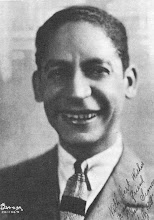
This is a good solid general outline on the history.
I would consider this the basics of Jazz roots and i recommend
memorizing this...
The Origins of Jazz - Pre 1895
A review of New Orleans' unique history and culture, with its distinctive character rooted in the colonial period, is helpful in understanding the complex circumstances that led to the development of New Orleans jazz. The city was founded in 1718 as part of the French Louisiana colony. The Louisiana territories were ceded to Spain in 1763 but were returned to France in 1803. France almost immediately sold the colony to the United States in the Louisiana Purchase. New Orleans differed greatly from the rest of the young United States in its Old World cultural relationships. The Creole culture was Catholic and French-speaking rather than Protestant and English-speaking. A more liberal outlook on life prevailed, with an appreciation of good food, wine, music, and dancing. Festivals were frequent, and Governor William Claiborne, the first American-appointed governor of the territory of Louisiana, reportedly commented that New Orleanians were ungovernable because of their preoccupation with dancing.

The colony's culture was enriched not only from Europe but from Africa as well. As early as 1721 enslaved West Africans totaled 30% of the population of New Orleans, and by the end of the 1700s people of varied African descent, both free and slave, made up more than half the city's population. Many arrived via the Caribbean and brought with them West Indian cultural traditions.
After the Louisiana Purchase, English-speaking Anglo- and African-Americans flooded into New Orleans. Partially because of the cultural friction, these newcomers began settling upriver from Canal Street and from the already full French Quarter (Vieux Carre). These settlements extended the city boundaries and created the "uptown" American sector as a district apart from the older Creole "downtown." The influx of black Americans, first as slaves and later as free people, into uptown neighborhoods brought the elements of the blues, spirituals, and rural dances to New Orleans' music.

Ethnic diversity increased further during the 19th century. Many German and Irish immigrants came before the Civil War, and the number of Italian immigrants increased afterward. The concentration of new European immigrants in New Orleans was unique in the South.
This rich mix of cultures in New Orleans resulted in considerable cultural exchange. An early example was the city's relatively large and free "Creole of color" community. Creoles of color were people of mixed African and European blood and were often well educated craft and trades people. Creole of color musicians were particularly known for their skill and discipline. Many were educated in France and played in the best orchestras in the city.
In the city, people of different cultures and races often lived close together (in spite of conventional prejudices), which facilitated cultural interaction. For instance, wealthier families occupied the new spacious avenues and boulevards uptown, such as St. Charles and Napoleon avenues, while poorer families of all races who served those who were better off often lived on the smaller streets in the centers of the larger blocks. New Orleans did not have mono cultural ghettos like many other cities.

New Orleans' unusual history, its unique outlook on life, its rich ethnic and cultural makeup, and the resulting cultural interaction set the stage for development and evolution of many distinctive traditions. The city is famous for its festivals, foods, and, especially, its music. Each ethnic group in New Orleans contributed to the very active musical environment in the city, and in this way to the development of early jazz.
A well-known example of early ethnic influences significant to the origins of jazz is the African dance and drumming tradition, which was documented in New Orleans. By the mid-18th century, slaves gathered socially on Sundays at a special market outside the city's rampart. Later, the area became known as Congo Square, famous for its African dances and the preservation of African musical and cultural elements.
Although dance in Congo Square ended before the Civil War, a related musical tradition surfaced in the African-American neighborhoods at least by the 1880s. The Mardi Gras Indians were black "gangs" whose members "masked" as American Indians on Mardi Gras day to honor them. Black Mardi Gras Indians felt a spiritual affinity with Native American Indians. On Mardi Gras day gang members roamed their neighborhoods looking to confront other gangs in a show of strength that sometimes turned violent. The demonstration included drumming and call-and-response chanting that was strongly reminiscent of West African and Caribbean music. Mardi Gras Indian music was part of the environment of early jazz. Several early jazz figures such as Louis Armstrong and Lee Collins described being affected by Mardi Gras Indian processions as youngsters, and Jelly Roll Morton claimed to have been a "spyboy," or scout, for an Indian gang as a teenager.
New Orleans music was also impacted by the popular musical forms that proliferated throughout the United States following the Civil War. Brass marching bands were the rage in the late 1880s, and brass bands cropped up across America. There was also a growing national interest in syncopated musical styles influenced by African-American traditions, such as cakewalks and minstrel tunes. By the 1890s syncopated piano compositions called ragtime created a popular music sensation, and brass bands began supplementing the standard march repertoire with ragtime pieces.
Early Development of Jazz - 1890 to 1917
Brass bands had become enormously popular in New Orleans as well as the rest of the country. In the 1880s New Orleans brass bands, such as the Excelsior and Onward, typically consisted of formally trained musicians reading complex scores for concerts, parades, and dances.
The roots of jazz were largely nourished in the African-American community but became a broader phenomenon that drew from many communities and ethnic groups in New Orleans. "Papa" Jack Laine's Reliance Brass Bands, for instance, were integrated before segregation pressures increased. Laine's bands, which were active around 1890 to 1913, became the most well known of the white ragtime bands. Laine was a promoter of the first generation of white jazzmen.

A special collaborative relationship developed between brass bands in New Orleans and mutual aid and benevolent societies. Mutual aid and benevolent societies were common among many ethnic groups in urban areas in the 19th century. After the Civil War such organizations took on special meaning for emancipated African-Americans who had limited economic resources. The purposes of such societies were to "help the sick and bury the dead" - important functions because blacks were generally prohibited from getting commercial health and life insurance and other services.
While many organizations in New Orleans used brass bands in parades, concerts, political rallies, and funerals, African-American mutual aid and benevolent societies had their own expressive approach to funeral processions and parades, which continues to the present. At their events, community celebrants would join in the exuberant dancing procession. The phenomena of community participation in parades became known as "the second line," second, that is, to the official society members and their contracted band.
Other community organizations also used New Orleans-style "ragtime" brass bands. Mardi Gras walking clubs, notably the Jefferson City Buzzards and the Cornet Carnival Club (still in existence), were employers of the music.

By the turn of the century New Orleans was thriving not only as a major sea and river port but also as a major entertainment center. Legitimate theater, vaudeville, and music publishing houses and instrument stores employed musicians in the central business district. Less legitimate entertainment establishments flourished in and around the officially sanctioned red-light district near Canal and Rampart streets. Out on the shores of Lake Ponchartrain bands competed for audiences at amusement parks and resorts. Street parades were common in the neighborhood, and community social halls and corner saloons held dances almost nightly.
New Orleanians never lost their penchant for dancing, and most of the city's brass band members doubled as dance band players. The Superior Brass Band, for instance, had overlapping personnel with its sister group, The Superior Orchestra. Dance bands and orchestras softened the brass sound with stringed instruments, including violin, guitar, and string bass. At the turn of the century string dance bands were popular in more polite settings, and "dirty" music, as the more genteel dances were known, was the staple of many downtown Creole of color bands such as John Robichaux's Orchestra.
But earthier vernacular dance styles were also increasing in popularity in New Orleans. Over the last decade of the 19th century, non reading musicians playing more improvised music drew larger audiences for dances and parades. For example, between 1895 and 1900 uptown cornet player Charles "Buddy" Bolden began incorporating improvised blues and increasing the tempo of familiar dance tunes. Bolden was credited by many early jazzmen as the first musician to have a distinctive new style. The increasing popularity of this more "ratty" music brought many trained and untrained musicians into the improvising bands. Also, repressive segregation laws passed in the 1890s (as a backlash to Reconstruction) increased discrimination toward anyone with African blood and eliminated the special status previously afforded Creoles of color. These changes ultimately united black and Creole of color musicians, thus strengthening early jazz by combing the uptown improvisational style with the more disciplined Creole approach.
The instrumentation and section playing of the brass bands increasingly influenced the dance bands, which changed in orientation from string to brass instruments. What ultimately became the standard front line of a New Orleans jazz band was cornet, clarinet, and trombone. These horns collectively improvising or "faking" ragtime yielded the characteristic polyphonic sound of New Orleans jazz.

Most New Orleans events were accompanied by music, and there were many opportunities for musicians to work. In addition to parades and dances, bands played at picnics, fish fries, political rallies, store openings, lawn parties, athletic events, church festivals, weddings, and funerals. Neighborhood social halls, some operated by mutual aid and benevolent societies or other civic organizations, were frequently the sites of banquets and dances. Early jazz was found in neighborhoods all over and around New Orleans - it was a normal part of community life.
Sometime before 1900, African-American neighborhood organizations known as social aid and pleasure clubs also began to spring up in the city. Similar in their neighborhood orientation to the mutual aid and benevolent societies, the purposes of social and pleasure clubs were to provide a social outlet for its members, provide community service, and parade as an expression of community pride. This parading provided dependable work for musicians and became an important training ground for young musical talent.
New Orleans jazz began to spread to other cities as the city's musicians joined riverboat bands and vaudeville, minstrel, and other show tours. Jelly Roll Morton, an innovative piano stylist and composer, began his odyssey outside of New Orleans as early as 1907. The Original Creole Orchestra, featuring Freddie Keppard, was an important early group that left New Orleans, moving to Los Angeles in 1912 and then touring the Orpheum Theater circuit, with gigs in Chicago and New York. In fact, Chicago and New York became the main markets for New Orleans jazz. Tom Brown's Band from Dixieland left New Orleans for Chicago in 1915, and Nick LaRocca and other members of the Original Dixieland Jazz Band headed there in 1916.

http://www.nps.gov/archive/jazz/Jazz%20History_origins_pre1895.htm